| |
Tin is a chemical element with the symbol Sn (from Latin: stannum) and atomic number 50. It is a post-transition metal in group 14 of the periodic table. It is obtained chiefly from the mineral cassiterite, which contains stannic oxide, SnO2. Tin shows a chemical similarity to both of its neighbors in group 14, germanium and lead, and has two main oxidation states, +2 and the slightly more stable +4. Tin is the 49th most abundant element and has, with 10 stable isotopes, the largest number of stable isotopes in the periodic table, thanks to its magic number of protons. It has two main allotropes: at room temperature, the stable allotrope is β-tin, a silvery-white, malleable metal, but at low temperatures it transforms into the less dense grey α-tin, which has the diamond cubic structure. Metallic tin does not easily oxidize in air.
Tin extraction and use can be dated to the beginnings of the Bronze Age around 3000 BC, when it was observed that copper objects formed of poly metallic ores with different metal contents had different physical properties. The earliest bronze objects had a tin or arsenic content of less than 2% and are therefore believed to be the result of unintentional alloying due to trace metal content in the copper ore.
Tin is the 49th most abundant element in Earth's crust, representing 2 ppm compared with 75 ppm for zinc, 50 ppm for copper, and 14 ppm for lead.
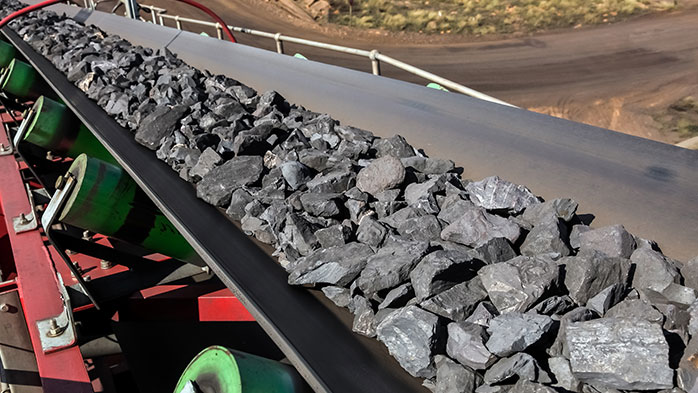
Tin does not occur as the native element but must be extracted from various ores. Cassiterite (SnO2) is the only commercially important source of tin, although small quantities of tin are recovered from complex sulfides such as stannite, cylindrite, franckeite, canfieldite, and teallite. Minerals with tin are almost always associated with granite rock, usually at a level of 1% tin oxide content.
Because of the higher specific gravity of tin dioxide, about 80% of mined tin is from secondary deposits found downstream from the primary lodes. Tin is often recovered from granules washed downstream in the past and deposited in valleys or the sea. The most economical ways of mining tin are by dredging, hydraulic king, or open pits. Most of the world's tin is produced from placer deposits, which can contain as little as 0.015% tin.
World tin mine reserves (tonnes, 2011) |
Country |
Reserves |
 China China
|
1,500,000 |
 Malaysia Malaysia
|
250,000 |
 Peru Peru
|
310,000 |
 Indonesia Indonesia
|
800,000 |
 Brazil Brazil
|
590,000 |
 Bolivia Bolivia
|
400,000 |
 Russia Russia
|
350,000 |
 Australia Australia
|
180,000 |
 Thailand Thailand
|
170,000 |
Other |
180,000 |
Total |
4,800,000 |
|
|

|